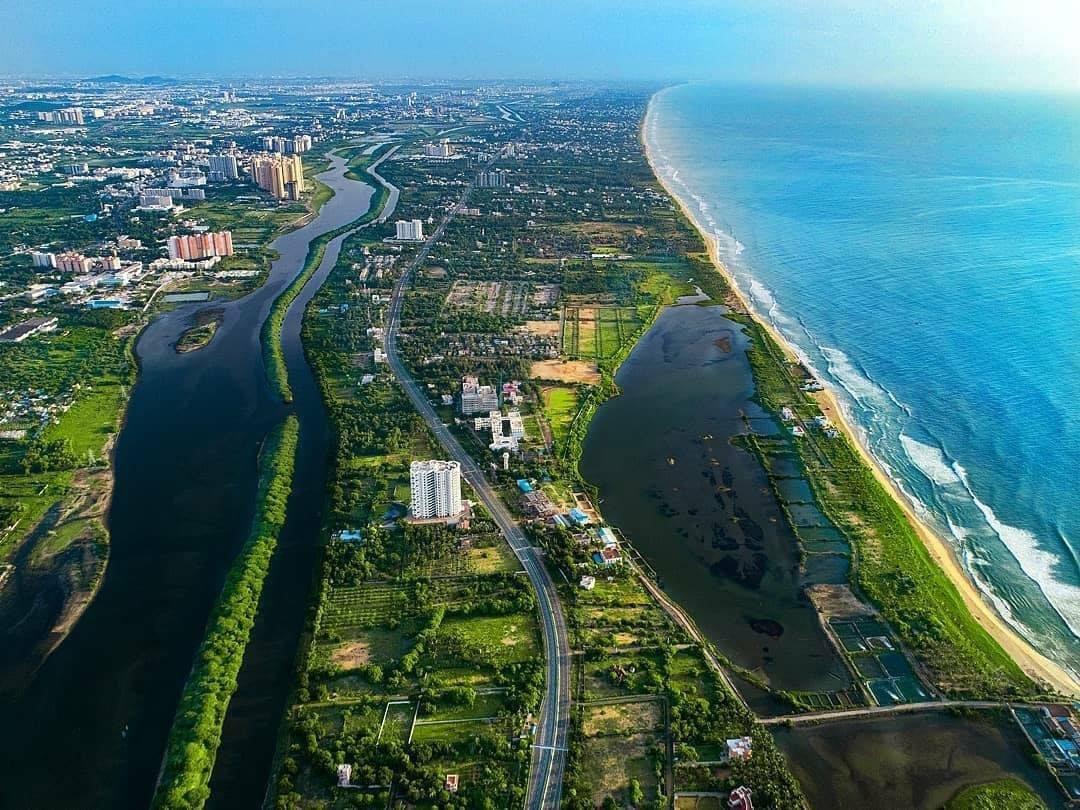
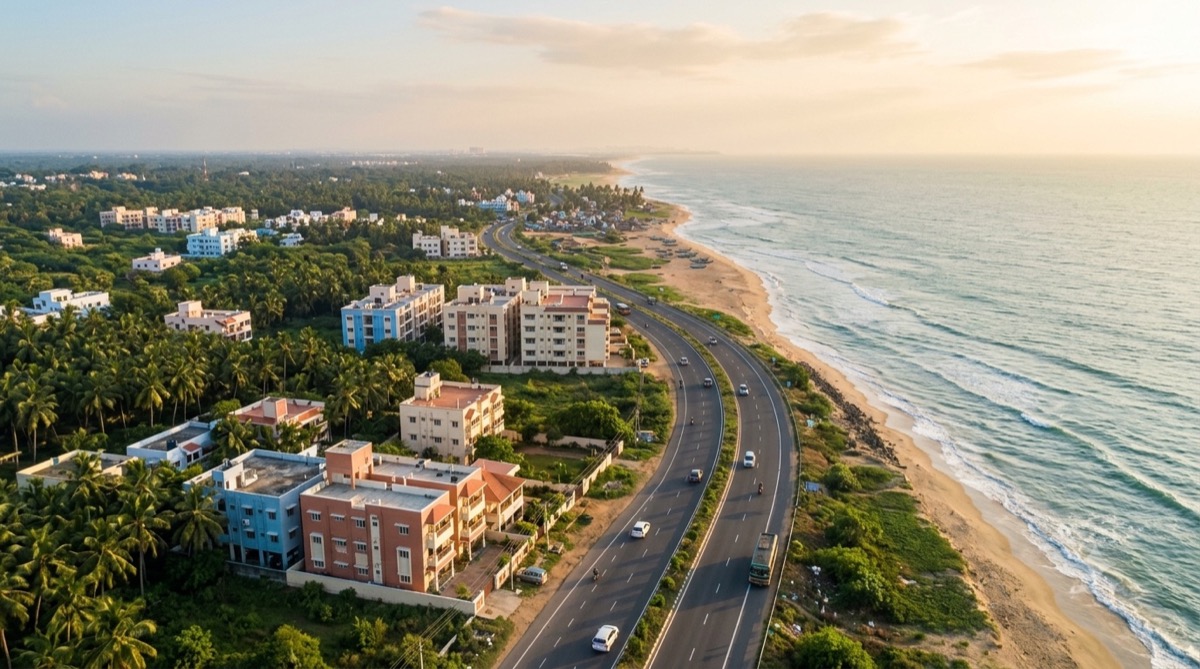
Why Poonamallee Is Emerging as One of Western Chennai’s Top Residential & Infrastructure Investment Corridors in 2026
Published: October 2026 · Last updated: 22 October 2026 · Infrastructure status checked: 22 October 2026
Poonamallee is emerging as one of Western Chennai’s most closely watched residential growth corridors, supported by the opening of Chennai Metro Phase 2’s Poonamallee Bypass–Vadapalani stretch, connectivity through NH-48 and the wider Chennai road network, employment centres along the Porur–Mount Poonamallee Road belt, and access to the Sriperumbudur–Oragadam industrial region.
The investment case for Poonamallee is no longer based solely on anticipated infrastructure. Metro passenger services have commenced, adding a new public transport option for residents and commuters along the western corridor. The area’s longer-term potential also depends on employment growth, residential demand, local infrastructure and the quality of individual developments.
For homebuyers and property investors, Poonamallee offers a combination of improving connectivity, access to employment and participation in Western Chennai’s expanding residential market. However, future appreciation is not guaranteed, and proposed infrastructure must be distinguished from projects already in service.
Poonamallee at a Glance
| Growth factor | Relevance to property |
|---|---|
| Chennai Metro Phase 2, Corridor 4 | 26.1 km Lighthouse–Poonamallee Bypass corridor |
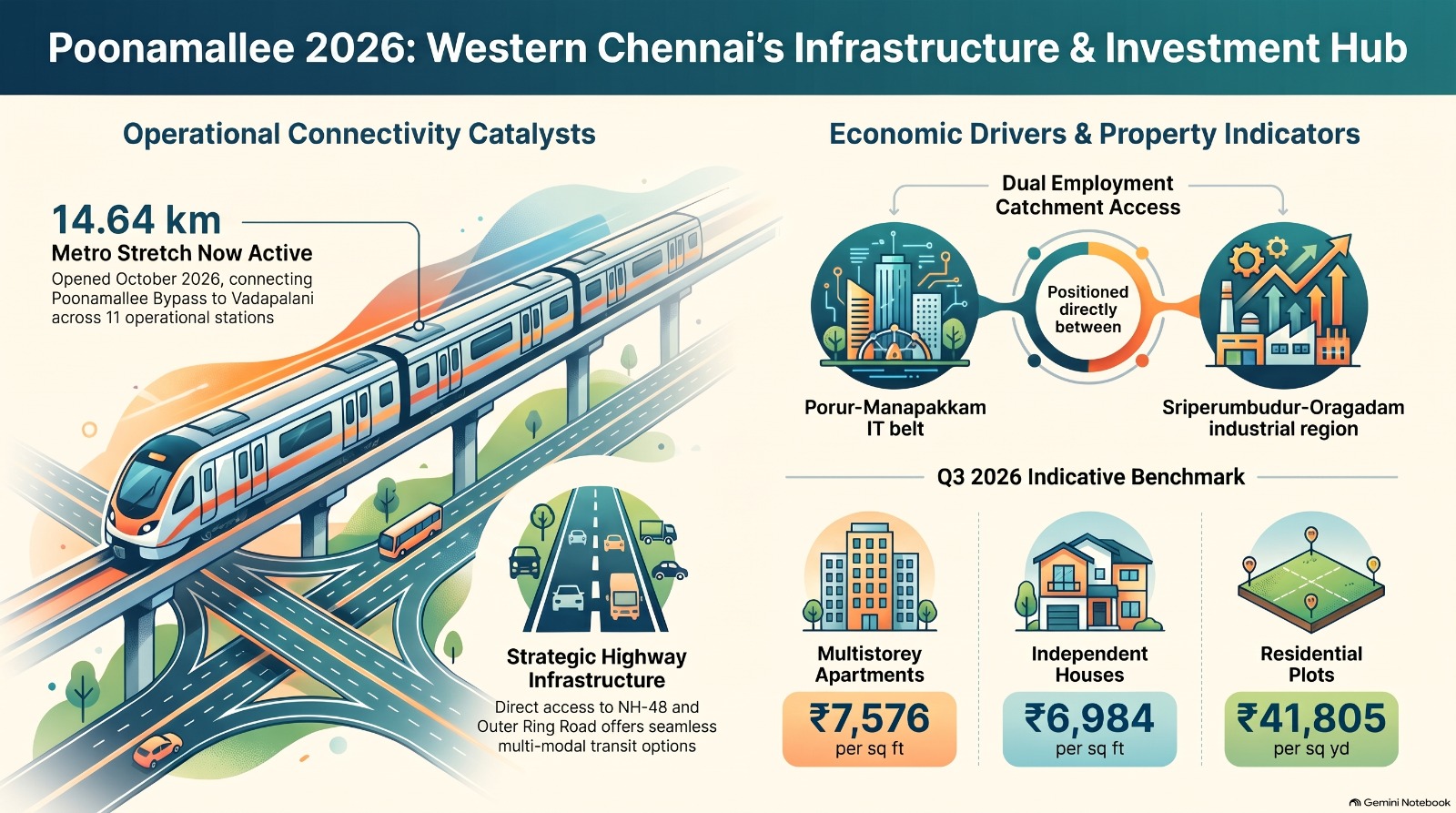
| Poonamallee Bypass–Vadapalani metro | 14.64 km opened to passengers on 11 October 2026 |
| Metro operating hours | Scheduled 6:00 AM–9:00 PM from 23 October 2026 |
| NH-48 | Access to the Chennai–Bengaluru highway corridor |
| Western Chennai employment belt | Access to Porur, Manapakkam and Mount Poonamallee Road |
| Sriperumbudur–Oragadam | Established industrial and manufacturing ecosystem |
| Property-price indicators | MagicBricks Q3 2026 listing indicators vary by property type |
| Future metro proposal | Poonamallee–Sunguvarchatram extension via Sriperumbudur |
1. Chennai Metro Phase 2: Poonamallee’s Biggest Connectivity Catalyst
The opening of Chennai Metro Phase 2’s Poonamallee Bypass–Vadapalani section marks an important milestone in Western Chennai’s transport infrastructure.
According to Chennai Metro Rail Limited (CMRL), Phase 2 covers 118.9 km across three corridors. Corridor 4 extends for 26.1 km between Lighthouse and Poonamallee Bypass, as part of the wider ₹63,246-crore Phase 2 project.
On 11 October 2026, Prime Minister Narendra Modi inaugurated the first operational stretch of Corridor 4, connecting Poonamallee Bypass with Vadapalani. Regular passenger services began that day, marking the start of passenger operations on this section of Phase 2. The approximately 14.64 km stretch was developed at a reported cost of around ₹4,900 crore and connects Western Chennai with the existing Metro network at Vadapalani.
The initial passenger-service section has 11 operational stations, including Poonamallee Bypass, Poonamallee Bus Stand, Poonamallee Government Hospital, Karayanchavadi, Kumananchavadi, Kattupakkam, Iyyappanthangal, Thelliyaragaram, Porur Bypass, Porur Junction and Vadapalani.
Sources: Press Information Bureau — inauguration record · Indian Express — stations and passenger timings
Why does the metro matter for property?
Mass transit can improve accessibility to employment centres and make residential locations more practical for commuters. The new connection also gives residents along the route another option besides road transport.
For Poonamallee, the wider Corridor 4 network offers a link towards Porur and Vadapalani, including access to interchange with the existing Metro network.
However, the benefit will vary by property. Buyers should assess actual road or walking distance to the nearest operational station, feeder transport, pedestrian access and the practicality of their daily commute. A property marketed as “near Metro” is not necessarily within convenient walking distance.
The important change is that Poonamallee now has a metro service in passenger operation, rather than relying entirely on a future-connectivity proposition.
2. Poonamallee’s Multi-Modal Road Advantage
Metro is only one part of Poonamallee’s connectivity story.
The locality is positioned on the western side of Chennai’s metropolitan road network, with access towards NH-48, the Chennai–Bengaluru highway corridor, and connections to the wider Chennai Bypass and Outer Ring Road network.
The National Highways Authority of India has documented the Poonamallee–Walajapet section of NH-48. CMRL’s documentation also refers to road connectivity around the Outer Ring Road Clover Leaf.
Sources: NHAI — NH-48 documentation · CMRL — Outer Ring Road Clover Leaf
This network connects the residential catchment with parts of Western Chennai and the wider industrial region. For residents, that can provide different travel options depending on their destination; for businesses, it can help connect urban markets with regional industrial and logistics activity.
For property investors, the combination of road connectivity and an operational metro service gives Poonamallee a broader transport proposition than a suburb dependent on a single route.
3. Western Chennai’s Residential Market Is Expanding
Poonamallee should also be viewed in the context of Western Chennai’s larger residential market.
JLL’s Q2 2026 Chennai residential market report says Chennai residential sales reached an eleven-quarter high, with southern and western suburbs leading new-launch activity.
This provides useful context for Poonamallee, which forms part of the wider western residential expansion. Established markets such as Porur coexist with emerging and expanding locations farther west, giving homebuyers and investors a range of neighbourhoods and price points to evaluate.
The broader trend does not establish that every locality or project will appreciate. Actual performance depends on supply, pricing, housing quality, access to employment and local services.
4. The Porur–Mount Poonamallee Road Employment Belt
Residential growth is more sustainable when it is supported by jobs and economic activity. The Porur–Manapakkam–Mount Poonamallee Road belt has developed into an important employment area serving technology, services and other businesses.
One example is the L&T Innovation Campus in Manapakkam. According to L&T Realty, the campus is a 40-acre development on Mount Poonamallee Road. Phase I comprises 1.05 million sq ft of leasable space, with potential for the wider development to reach 6.5 million sq ft.
JLL’s Q2 2026 Chennai office market report also describes continuing office demand, with IT/ITeS and flexible-office sectors supporting activity during the first half of 2026.
This matters to Poonamallee because homes can serve employees working in nearby employment centres without every office needing to be located inside the locality itself. Improved metro access may also widen the range of locations commuters can realistically consider.
Could Mount Poonamallee Road Become Western Chennai’s “OMR 2.0”?
The term “OMR 2.0” appeared in earlier real-estate commentary about Mount Poonamallee Road’s potential to attract more IT and ITES development. A 2020 Times of India report discussed this possibility, including comparisons with commercial costs elsewhere in Chennai.
That article is historical evidence, not a current 2026 market survey. The more useful question today is whether the corridor is developing the ingredients associated with an employment hub: office space, transport connectivity, a residential catchment and access to other commercial districts.
The evidence supports discussing Mount Poonamallee Road as an emerging employment corridor, but calling it the next OMR remains an analytical comparison rather than an official designation.
5. The Sriperumbudur–Oragadam Industrial Catchment
Poonamallee’s significance also comes from its position relative to the western industrial region.
The Sriperumbudur–Oragadam belt is an established manufacturing and industrial area. SIPCOT’s industrial-park database lists industrial parks and multi-sector special economic zones at Sriperumbudur and Oragadam.
These industrial and manufacturing clusters provide a broader employment catchment for Western Chennai. Housing demand can extend beyond the industrial sites themselves as employees and associated businesses seek homes in neighbouring residential markets.
Poonamallee’s position between the more urbanised portions of Chennai and the western industrial region is therefore one of the factors supporting its longer-term residential proposition. The strength of that relationship will depend on actual commuting patterns, employment locations and transport accessibility rather than geographic proximity alone.
6. What Are Property Prices in Poonamallee in 2026?
Property prices in Poonamallee vary by micro-market, property type, project quality, amenities, age, access roads and proximity to transport links.
MagicBricks’ Q3 2026 property-rate page reports indicative averages of approximately:
| Property category | Indicative portal figure |
|---|---|
| Independent houses | ₹6,984 per sq ft |
| Multistorey apartments | ₹7,576 per sq ft |
| Residential plots | ₹41,805 per sq yd |
These figures represent portal/listing-market indicators, not official registered transaction prices. Figures for different property types are not directly interchangeable, and values can vary substantially between projects.
For buyers, the more useful questions are whether the price is competitive with comparable properties in the same micro-market, how close the property is to the metro, what local services are available and whether the asking price already reflects the anticipated infrastructure benefit. The opening of the metro improves the area’s connectivity proposition, but it does not automatically establish a particular rate of property appreciation.
7. Poonamallee–Sunguvarchatram Metro: A Future Connectivity Proposal
A separate infrastructure proposal could further strengthen Western Chennai’s connectivity if it progresses.
The Tamil Nadu Government’s 2025–26 Budget proposed a 27.9-km Poonamallee–Sunguvarchatram metro extension via Sriperumbudur, with an estimated cost of ₹8,779 crore. A July 2026 Times of India report reported that the extension remained under consideration and that the approval process was continuing.
This proposal is distinct from the Poonamallee Bypass–Vadapalani section, which is already carrying passengers. The extension should continue to be described as proposed future infrastructure, not as an operational line or a guaranteed completion commitment.
For investors, proposed infrastructure may provide long-term upside, but a purchase should not depend entirely on a project that is still subject to approvals and implementation.
8. What Happened to the Parandur Airport Proposal?
Earlier real-estate commentary frequently treated the proposed Parandur greenfield airport as a possible catalyst for property development across parts of western Chennai. That thesis has changed.
On 24 August 2026, the Tamil Nadu Government announced that the Parandur airport proposal would be dropped and that an alternative site would be assessed for Chennai’s second airport. A subsequent DT Next report on 7 October 2026 reported that the government had informed the Airports Authority of India that the Parandur project was off and that no replacement site had yet been finalised.
Sources: News On AIR — Parandur airport proposal dropped · DT Next — government update
Therefore, Parandur airport should not be presented as a confirmed catalyst for Poonamallee property appreciation. The investment case should be based on evidence relating to the operational metro, existing road links, employment centres and regional residential demand.
9. Which Areas Around Poonamallee Should Buyers Compare?
Poonamallee is not one uniform property market. Pockets around Poonamallee Bypass, Kumananchavadi, Karayanchavadi, Kattupakkam, Senneer Kuppam and the wider Thirumazhisai and Sriperumbudur direction can have different access, development levels and price points.
For metro commuters, proximity to one of the stations currently open to passengers may be important. Buyers should confirm that a station is operating and assess practical access from the property.
For families, schools, healthcare, retail, water supply and drainage may matter more than the headline distance to a major road.
For long-term investors, future connectivity proposals may be relevant, but should be considered alongside current demand, property pricing, developer quality and local infrastructure.
For rental investors, actual access to employment centres and evidence of local rental demand should take precedence over broad claims of future capital appreciation.
The best micro-market will depend on the buyer’s objectives, budget and holding period.
10. Poonamallee vs Porur: Which Is Better for Investment?
Porur and Poonamallee represent different stages of Western Chennai’s development.
Porur is a more established residential and employment centre with existing commercial activity and a mature local ecosystem. Poonamallee offers a growth-corridor proposition supported by the newly opened metro connection, highway access and proximity to the western industrial region.
For buyers, this is a trade-off rather than an automatic winner. Porur may offer greater maturity and established demand; Poonamallee may provide more opportunities to evaluate developing micro-markets at different entry prices. The better investment depends on the individual property, its acquisition price, maintenance costs, rental potential, access to transport and the buyer’s investment horizon.
11. Is Poonamallee a Good Place to Invest in 2026?
Poonamallee has credible long-term growth drivers, particularly for buyers looking at a medium- to long-term holding period.
The investment case includes the new Poonamallee Bypass–Vadapalani metro service, NH-48 and the wider western road network, access to the Porur–Manapakkam employment belt, the Sriperumbudur–Oragadam industrial ecosystem, and broader residential activity across Western Chennai.
However, no locality guarantees appreciation. Significant housing supply, competition among projects, pricing and differences in local infrastructure can affect outcomes.
A sound purchase should remain attractive even if a proposed future project is delayed. Buyers should evaluate the property’s current usability and market value before assigning a premium to future development.
The most prudent approach is to buy a well-verified property in a suitable micro-market and treat future infrastructure as potential upside, not a guarantee.
12. What Should Buyers Check Before Buying Property in Poonamallee?
Before purchasing, buyers should verify:
- Title and ownership history.
- Applicable planning approvals and RERA registration where required.
- Patta, survey details and permitted land use.
- Water supply, drainage and flood or waterlogging history.
- Road access and electricity infrastructure.
- Developer record, construction quality and maintenance arrangements.
- Actual distance to an operational metro station.
- Comparable property prices and realistic rental demand.
Buyers should also confirm the latest metro schedule and station availability before relying on public transport for a daily commute.
Infrastructure can make a locality more accessible, but it does not make an overpriced or poorly documented property a good investment.
Frequently Asked Questions About Poonamallee Real Estate
Is Poonamallee a good place to invest in 2026?
Poonamallee has credible growth drivers, including the newly operational metro stretch, highway connectivity, nearby employment centres and Western Chennai’s residential expansion. Returns will depend on the property, micro-market, purchase price and holding period.
Is the Poonamallee–Vadapalani Metro operational?
Yes. Passenger services on the 14.64-km stretch began on 11 October 2026, initially serving 11 stations between Poonamallee Bypass and Vadapalani.
How many metro stations are open on the Poonamallee–Vadapalani stretch?
Eleven stations initially opened to passengers: Poonamallee Bypass, Poonamallee Bus Stand, Poonamallee Government Hospital, Karayanchavadi, Kumananchavadi, Kattupakkam, Iyyappanthangal, Thelliyaragaram, Porur Bypass, Porur Junction and Vadapalani.
What is the property price in Poonamallee in 2026?
MagicBricks’ Q3 2026 listing indicators report approximately ₹6,984 per sq ft for independent houses and ₹7,576 per sq ft for multistorey apartments. These are indicative portal figures, not registered transaction prices, and vary by property and locality.
Will Metro connectivity increase property prices in Poonamallee?
The Metro can improve accessibility and potentially support demand, particularly for conveniently located properties. It does not guarantee price appreciation. Local supply, station access, purchase price and housing quality remain important.
Is Poonamallee better than Porur for property investment?
Porur is a more established residential and employment market, while Poonamallee offers an emerging growth-corridor profile. The right choice depends on budget, commute needs, rental prospects and the specific property.
What are the major infrastructure projects near Poonamallee?
The major current development is the operating Poonamallee Bypass–Vadapalani metro stretch, part of Corridor 4. The Poonamallee–Sunguvarchatram extension via Sriperumbudur is a separate future proposal and should not be treated as operational.
Is Parandur Airport still coming?
The Tamil Nadu Government announced in August 2026 that the proposed Parandur airport project would be dropped and that alternative sites would be assessed. It should not be treated as a confirmed investment catalyst for Poonamallee.
Is Poonamallee suitable for rental investment?
It may suit rental investors where the property has convenient access to employment centres, transport and local amenities. Buyers should assess actual area-level rents and vacancies rather than relying only on future appreciation forecasts.
Final Verdict: Why Poonamallee Matters
Poonamallee’s property story has entered a new phase. The opening of the Poonamallee Bypass–Vadapalani metro stretch has converted a major part of its connectivity narrative from a future promise into a passenger service. From 23 October 2026, the published schedule is also set to begin earlier, at 6:00 AM, giving commuters an additional early-morning travel option.
The Metro is the most visible catalyst, but it is not the entire investment thesis. Poonamallee’s wider appeal rests on its position between the expanding residential footprint of Chennai, the Porur–Manapakkam employment belt and the Sriperumbudur–Oragadam industrial region.
For homebuyers and investors, the area deserves consideration as part of a broader Western Chennai property strategy. The right decision, however, is not simply to buy because infrastructure has opened. It is to select the right micro-market, verify the property, compare prices and assess whether the investment makes sense on its current fundamentals.
Poonamallee merits a place on the shortlist of Western Chennai locations worth evaluating in 2026 — but property-level research remains essential.
Sources & References
The following sources support the article’s infrastructure, market, property-price and regional-development statements. Government and institutional sources are prioritised where available.
Metro and Transport Infrastructure
- Chennai Metro Rail Limited — Phase II Project Status — https://chennaimetrorail.org/project-status/
- CMRL — February 2026 Newsletter — https://chennaimetrorail.org/wp-content/uploads/2026/03/01_CMRL-News-Letter_Feb_2026.pdf
- Press Information Bureau — Poonamallee–Vadapalani Phase II Metro inauguration record — https://www.pib.gov.in/ShowAlbum.aspx?albumid=231132&lang=1®=3+
- Indian Express — Poonamallee–Vadapalani Metro inauguration, stations and passenger timings, 11 October 2026 — https://indianexpress.com/article/india/chennai-metro-phase-2-pm-modi-poonamallee-vadapalani-line-inauguration-stations-timings-10915646/
- DT Next — Revised Poonamallee–Vadapalani Metro start time from 23 October 2026 — https://www.dtnext.in/news/chennai/poonamallee-vadapalani-metro-line-to-start-services-at-6-am-from-october-23
- National Highways Authority of India — NH-48 documentation — https://nhai.gov.in/nhai/Doc/10Mar11/Feasibility%20Report.pdf
- CMRL — Outer Ring Road Clover Leaf / Road Diversion — https://chennaimetrorail.org/road-diversion/outer-ring-road-clover-leaf/
Government and Industrial Infrastructure
- Tamil Nadu Budget 2025–26 — Official document — https://www.tnbudget.tn.gov.in/tnweb_files/BS_2025_26_ENG_FINAL.pdf
- SIPCOT — Industrial Park and Land Details — https://sipcot.tn.gov.in/portal/reports/landdetails
- News On AIR — Parandur greenfield airport project announcement — https://newsonair.gov.in/tamil-nadu-cm-c-joseph-vijay-announces-dropping-of-parandur-greenfield-airport-project/
- DT Next — Parandur airport project update, October 2026 — https://www.dtnext.in/news/tamilnadu/tn-govt-tells-aai-parandur-airport-project-is-off-no-new-site-finalised-yet
Institutional Real Estate Research
- JLL — Chennai Residential Market Dynamics, Q2 2026 — https://www.jll.com/en-in/insights/market-dynamics/chennai-residential
- JLL — Chennai Office Market Dynamics, Q2 2026 — https://www.jll.com/en-in/insights/market-dynamics/chennai-office
- ANAROCK — Indian Residential Real Estate Sector Annual Report 2025 — https://websitemedia.anarock.com/media/Indian_Residential_Real_Estate_Sector_Annual_Report_2025_ce7aedb05f.pdf
Property Prices and Commercial Development
- MagicBricks — Poonamallee Property Rates and Trends — https://www.magicbricks.com/Property-Rates-Trends/Residential-House-rates-Poonamallee-in-Chennai
- Housing.com — Poonamallee Property Price Trends — https://housing.com/price-trends/property-rates-for-buy-in-poonamallee_chennai-P4nfj3gw2jrhyk6qh
- L&T Realty — L&T Innovation Campus, Chennai — https://www.lntrealty.com/offices/lt-innovation-campus-chennai/
Editorial note: Housing.com is not used as the principal source for the headline property-price figures because its locality page displays differing price indicators.
Historical / Supporting Journalism
- Times of India — Mount-Poonamallee Road and the “OMR 2.0” comparison, February 2020 — https://timesofindia.indiatimes.com/city/chennai/tamil-nadu-mount-poonamallee-road-could-turn-into-omr-2-0-for-it-firms/articleshow/74327122.cms
- Times of India — Poonamallee–Sunguvarchatram Metro extension reporting, July 2026 — https://timesofindia.indiatimes.com/city/chennai/airport-uncertainty-wont-affect-metro-rail-extension/articleshow/132669449.cms
- Indian Express — Earlier JLL residential-hotspot study — https://indianexpress.com/article/cities/chennai/real-estate-report-identifies-15-residential-hotspots-in-chennai-names-top-2-locales-5813474/
Disclaimers
Property prices: Property prices cited from online portals are indicative listing-market data and may differ from registered transaction prices. Actual prices vary by micro-market, project, property type, age, amenities and transport access.
Infrastructure: Operational services, proposed extensions and dropped projects are identified separately. Proposed infrastructure should not be interpreted as a guarantee of completion or property appreciation.